
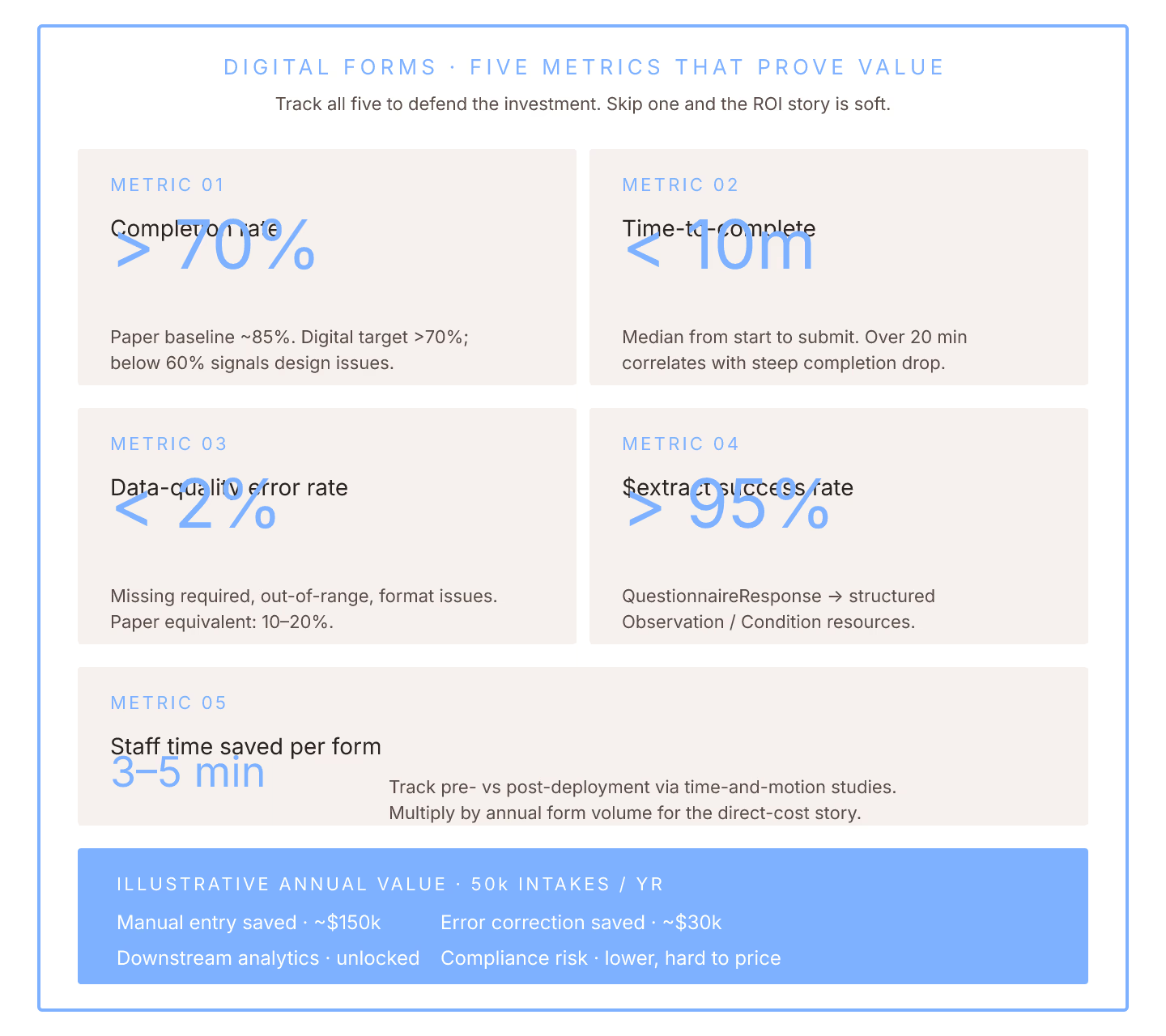
Digital forms replace paper and PDF in healthcare settings. Value delivery is measurable via five specific metrics; sites tracking them see clear ROI.
Metric 1: Completion rate. Percentage of started forms completed. Baseline paper: ~85%. Digital target: >70%. Below 60% suggests design issues.
Metric 2: Time-to-complete. Median time from start to submission. Target: <10 minutes. Over 20 minutes correlates with completion drop.
Metric 3: Data quality error rate. Percentage of submitted forms with data errors (missing required, out-of-range, format issues). Digital forms should be <2%; paper is 10-20%.
Metric 4: Downstream integration success. Percentage of QuestionnaireResponses that flow successfully into structured resources via `$extract`. Target: >95%.
Metric 5: Staff time saved. Manual data entry avoided. Track staff time per form pre- and post-deployment.
Value calculation (moderate clinic, 50k intake forms/year)
| Metric | Impact |
|---|---|
| Completion rate lift | 15-20 pp improvement over paper |
| Time-to-complete cut | 5-10 min per form |
| Data error rate cut | 10-15 pp lower |
| Downstream integration success | Enables analytics |
| Staff time saved | 3-5 min per form |
Annual value (illustrative)
| Category | Value |
|---|---|
| Manual entry saved | ~$150k |
| Error correction saved | ~$30k |
| Compliance risk reduction | Variable, real |
| Downstream analytics enabled | Business-case-specific |
Tracking implementation
1. Instrument form start, save, resume, submit events. 2. Log QuestionnaireResponse creation with completion metadata. 3. Track $extract success/failure. 4. Measure staff time via time-and-motion studies.
Common measurement mistakes
1. Not measuring baseline paper metrics. 2. Only tracking completion rate. 3. Missing downstream integration success. 4. Aggregating across form types (short vs. long). 5. Ignoring mobile vs. desktop breakdown.
Digital forms deliver value when measured well. Sites that track the five metrics above justify continued investment; sites without measurement can't prove ROI.