
FHIR fixtures and IG examples live in pull requests. Reviewing a PR that touches Bundle.json is not the same as reviewing a code change — the reviewer needs to see the semantic change, not the character-level noise. Most default PR diff renderers do the wrong thing for FHIR. Adding one CI step and one review convention makes them do the right thing. The site's Resource-vs-resource comparator is the tool a reviewer can paste into. For the wider FHIR framing, deeper FHIR walkthroughs has more.
What The Default Diff Shows
- Every character difference
- Every whitespace change
- Every meta.lastUpdated bump
- Every reordering
That is fine for source code. It is not fine for a Bundle where a formatter round-trip touches almost every line.
For the noise-reduction pattern, diffing two FHIR resources without drowning in reference noise is the entry.
Add A CI Step That Emits A Semantic Diff
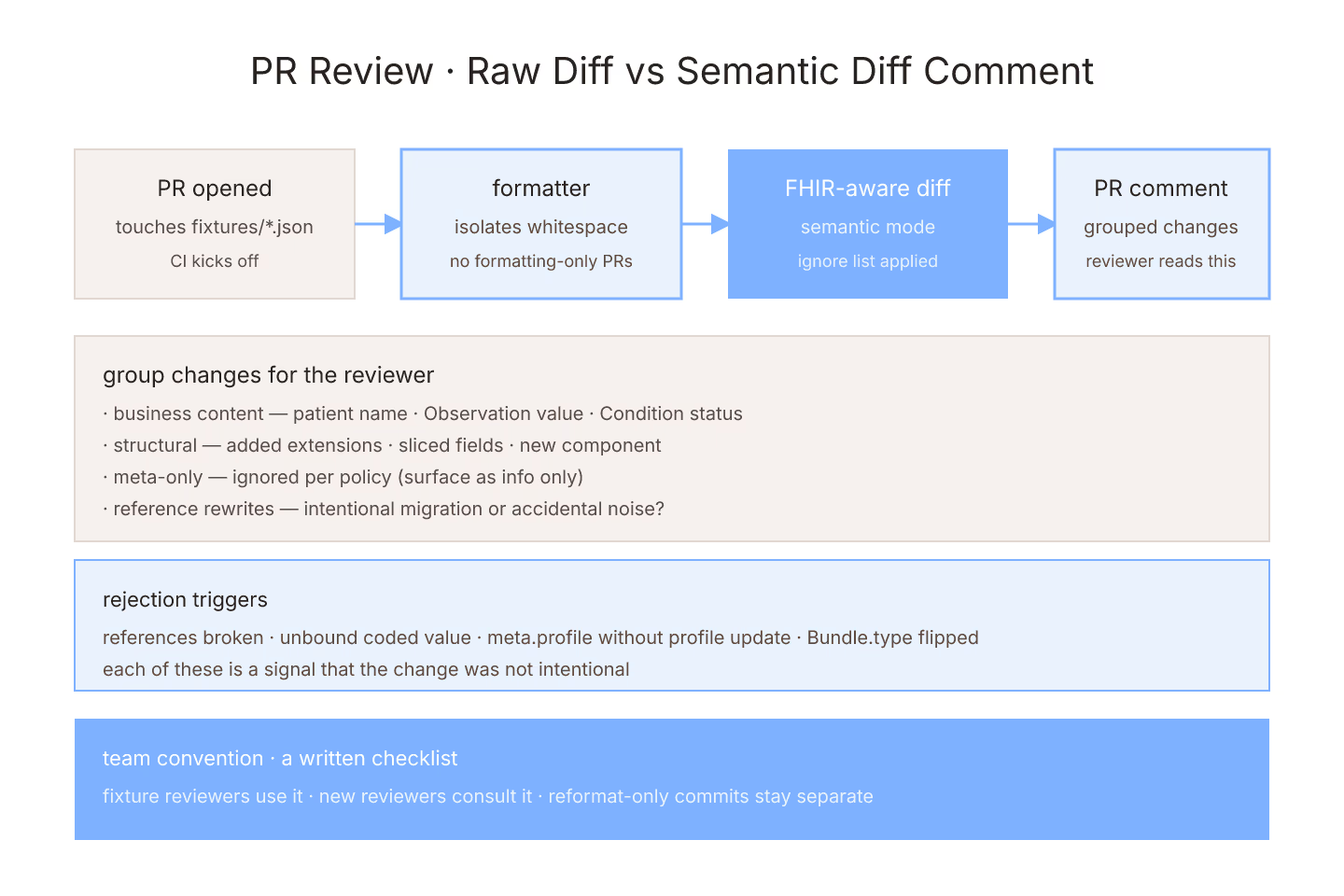
Every PR that touches a *.json under fixtures/ or examples/ runs:
- The formatter (to isolate whitespace changes)
- The FHIR-aware diff (to isolate semantic changes)
- Post the semantic diff as a PR comment
That comment is what the reviewer reads. The raw diff stays available for reference; the semantic diff is the primary artifact.
Format Before Committing
If your team uses a formatter (per the conventions), pre-commit formatting means the PR diff shows only intentional changes. Combined with the semantic diff, review becomes tractable.
Without pre-commit formatting, every PR touches every line and reviewers cannot see the intent.
Review Categories
Group the changes for the reviewer:
- Business content changes (patient's name, an observation's value)
- Structural changes (added extensions, sliced fields)
- Meta-only changes (should be ignored per policy)
- Reference rewrites (may be intentional migration)
Each category needs a different reviewer question. Grouping saves scroll time.
For the meta-ignore policy, ignoring meta.lastUpdated without ignoring the wrong things is the entry.
Handle Very Large Fixtures
Some fixtures are 5 MB Bundles. Reviewing them in a PR renderer is hopeless.
Options:
- Split the fixture into per-resource files (loses Bundle context)
- Emit a summary "here is what changed" that a human can review
- Require the author to explain the change in the PR description
The summary + explanation pattern usually works. Reviewers verify the summary against the description.
Reject PRs With Only Formatting Changes
A PR whose diff is entirely whitespace/formatting should be rejected in favor of a separate reformatting commit. Mixing reformat and semantic change in one PR means the semantic change hides.
Enforce with a "reformat commits must be separate" rule in your contributing guide.
Fixtures That Change Often
Some fixtures update daily as part of a data feed. Reviewing every change is untenable.
Options:
- Auto-approve routine changes with an integration test that runs the semantic diff
- Escalate only when the diff crosses a size or field threshold
- Review only monthly summaries
Pick per fixture type.
Rejection Criteria
Common reasons to reject a fixture PR:
- Reference targets in
Reference.referencebroken by the change - Coded values from an unbound value set
- Meta.profile changed without corresponding profile update
- Bundle.type changed (transaction vs batch)
Each of these is a red flag that the change was not intentional.
For the merge-conflict framing, when a diff should be a merge conflict is the entry.
Team Convention
Every FHIR team should have a written PR-review checklist for fixture changes. Fixture reviewers use it. Reviewers who see fixture changes for the first time can consult it.
The Short Version
CI emits a semantic diff as a PR comment. Format pre-commit. Group changes by category. Reject formatting-only PRs mixed with semantic changes. Handle large fixtures with summaries. Codify the review checklist.
Sources
- HL7 canonical FHIR JSON representation specification - HL7 canonical FHIR JSON representation specification