Have you ever felt like your medical information is trapped in a maze, impossible for different doctors to access easily? I know I have! It’s frustrating, isn’t it? Imagine a world where your health records flow seamlessly between healthcare providers, leading to better, faster, and more personalized care. That’s the promise of FHIR EMR, and today, I’m going to dive into how it’s changing the game. Maybe, just maybe, it’ll change yours too.
What Exactly Is a FHIR EMR, Anyway?
Okay, let’s break it down. EMR, or Electronic Medical Record, you probably know. It’s the digital version of your paper chart. But FHIR? That stands for Fast Healthcare Interoperability Resources. In essence, a FHIR EMR is an EMR system that utilizes FHIR standards to make data sharing much, much easier. Think of it like this — different computer programs speaking the same language. Suddenly, everything becomes more efficient. One anecdote that springs to mind… a few years back my mum had to transfer from her regular doctor to a specialist, and the amount of paperwork and repeating of medical history was frankly ludicrous! FHIR aims to eliminate that kind of hassle.
The Power of Seamless Data Sharing
This is where the real magic happens. FHIR EMR facilitates seamless data exchange between different healthcare systems. What does this mean in practice?
- Improved Coordination of Care — Doctors can easily access a patient’s complete medical history, regardless of where they received treatment. No more fragmented information!
- Reduced Medical Errors — With a comprehensive view of a patient’s health, providers are less likely to make errors based on incomplete information.
- Enhanced Patient Engagement — Patients can have greater control over their medical data and actively participate in their care. Imagine managing your health records from your phone! Pretty cool, eh?
“Data is the lifeblood of modern medicine,” Dr. Emily Carter, a leading healthcare IT consultant, once told me. “FHIR is the key to unlocking that data and making it work for everyone involved.” And honestly, she’s spot on.
FHIR EMR — It’s Not Just About Technology
It’s also about transforming workflows and improving patient outcomes. Think about it —
- Faster Diagnosis — With readily available data, doctors can diagnose conditions more quickly and accurately.
- Personalized Treatment Plans — Healthcare providers can tailor treatment plans to individual patient needs based on their unique medical history.
- Better Population Health Management — By aggregating and analyzing data from multiple sources, healthcare organizations can identify trends and develop targeted interventions.
Potential Challenges and the Road Ahead
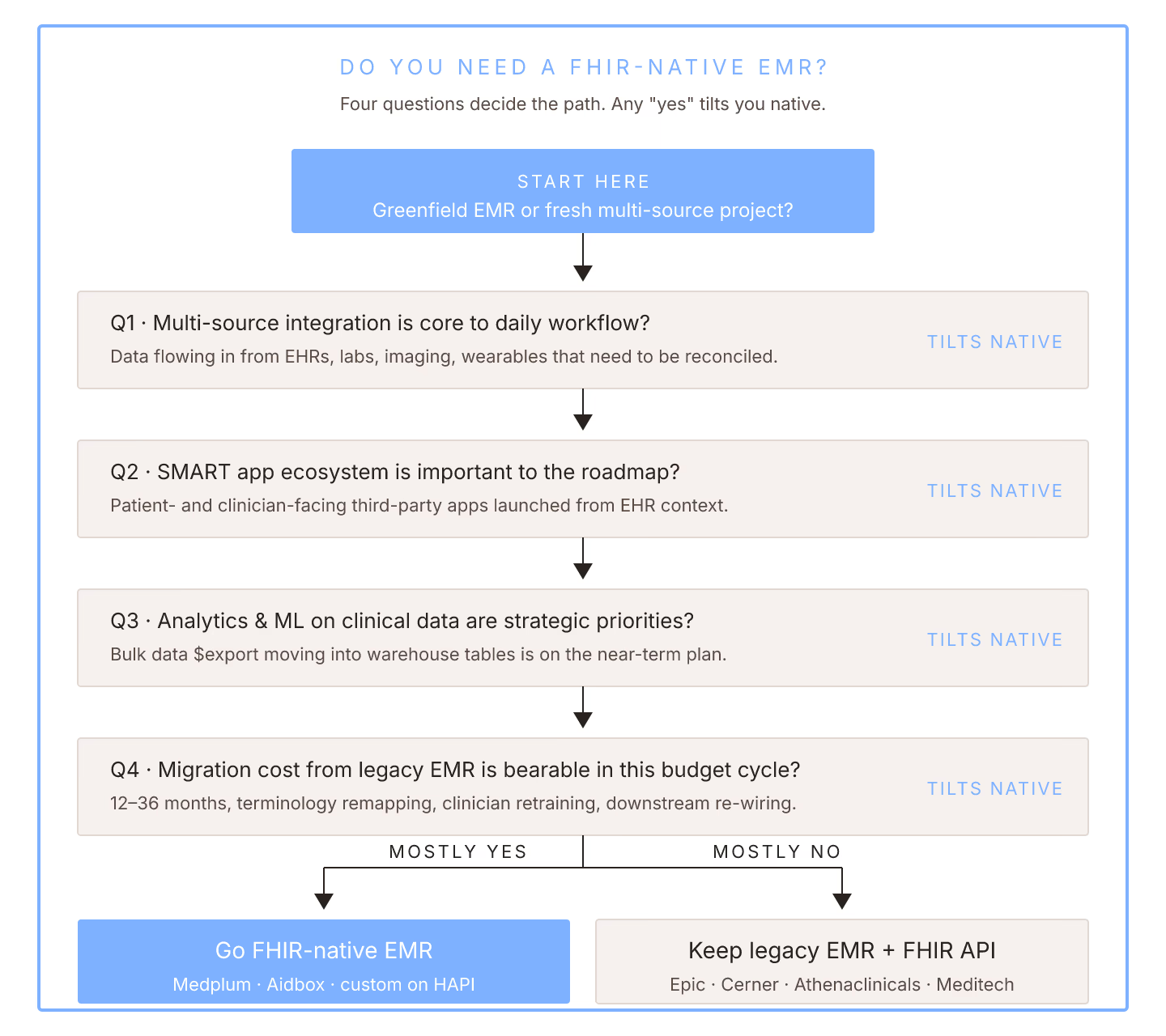
Of course, implementing FHIR EMR is not without its challenges. There are issues around data security, privacy concerns, and the need for interoperability testing. But hey, nothing worthwhile is ever easy, right? And, there’s the consideration that not all existing systems play nicely together – adapting older tech to FHIR EMR can be a headache, to say the least.
In Conclusion — Is FHIR EMR the Answer?
So, is FHIR EMR the silver bullet for all of healthcare’s woes? Probably not. But it’s a massive step in the right direction. It promises to revolutionize healthcare delivery by enabling seamless data sharing, improving patient outcomes, and empowering both patients and providers. The possibilities, frankly, are huge.
What are your thoughts on the future of FHIR and EMR systems? Have you experienced the frustrations of fragmented medical information firsthand? I’d love to hear your stories! Hopefully, this article has inspired you to think about the potential of FHIR EMR and the positive impact it can have on the future of healthcare. Let’s hope more healthcare providers embrace these systems for a healthier future for all!