
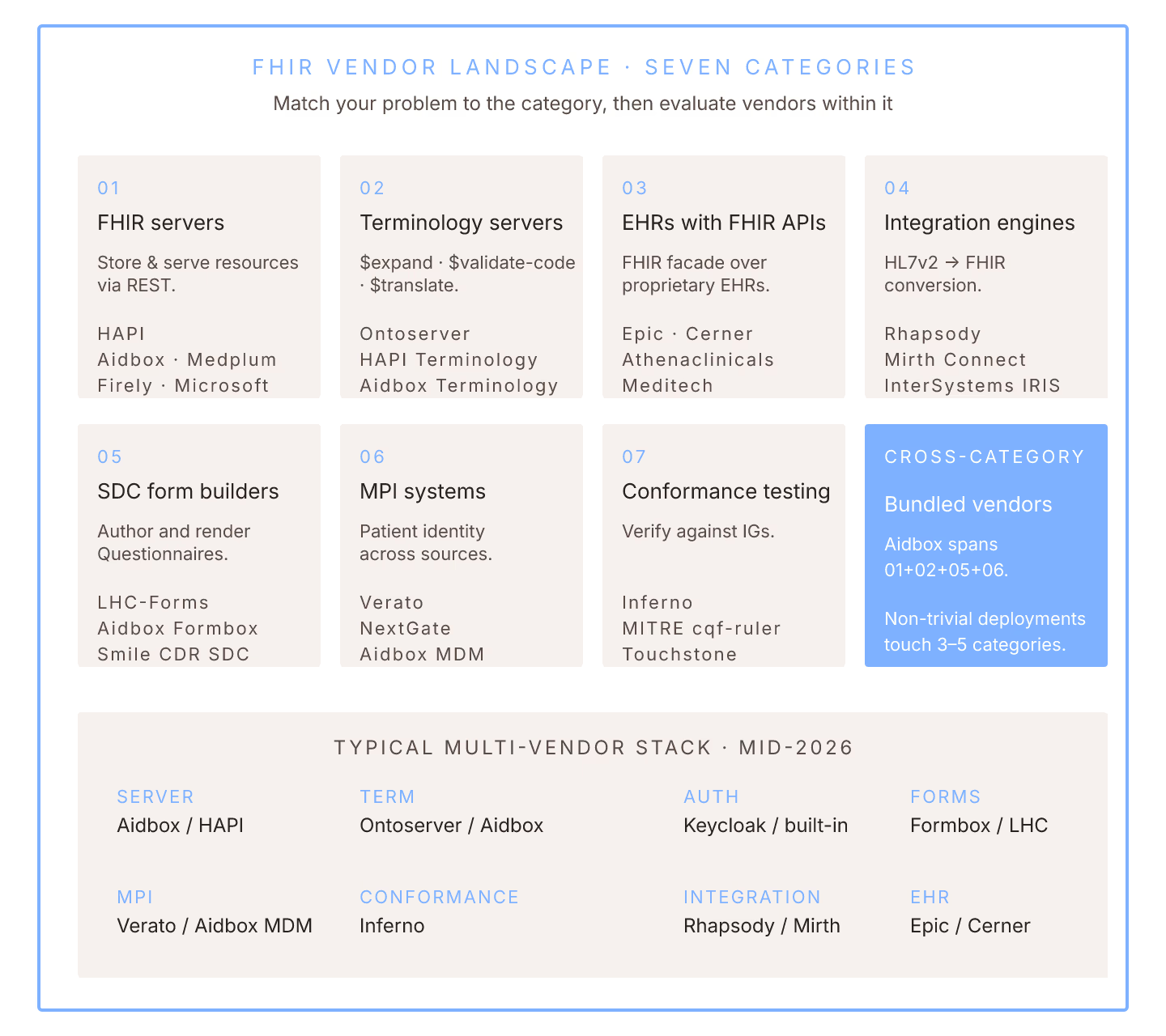
Ever wondered why your medical records seem trapped in different digital silos, unable to communicate with each other? It’s a frustrating reality for many, but the good news is, things are changing! Today, I’m going to walk you through the world of FHIR vendors and how they’re revolutionizing healthcare interoperability. Honestly, it’s more exciting than it sounds, especially when you realize how much easier it can make your (and your doctor’s) life!
What Exactly is FHIR, and Why Do We Need Vendors?
FHIR, or Fast Healthcare Interoperability Resources, is basically a standard for exchanging healthcare information electronically. Think of it as a universal language that allows different systems to understand each other. It’s like finally having a translator at that international conference where everyone’s been shouting in their native tongues.
But here’s the thing − implementing FHIR isn’t exactly a walk in the park. That’s where fhir vendors come in. They provide the tools, services, and expertise to help healthcare organizations adopt and leverage FHIR effectively. Without them, well, we’d still be stuck with fax machines and paper records (shudder!).
The Top 7 FHIR Vendors to Watch
Alright, let’s get down to brass tacks. These are some of the leading fhir vendors making waves in the healthcare industry −
- Epic Systems − You’ve probably heard of them. They’re a major player in the EHR (Electronic Health Record) space and are actively working to enhance their FHIR capabilities.
- Cerner − Another EHR giant that’s committed to FHIR interoperability. They’re investing heavily in FHIR-based solutions.
- Allscripts − They offer a range of FHIR-enabled products and services to help healthcare providers connect and share data.
- Meditech − Known for their focus on community hospitals, Meditech is also embracing FHIR to improve data exchange.
- InterSystems − They provide data platform solutions that support FHIR, enabling organizations to build innovative healthcare applications.
- Health Catalyst − A company specializing in data analytics and population health management, leveraging FHIR to integrate data from various sources.
- Smile Digital Health − This vendor focuses specifically on FHIR-based data liberation and exchange, offering a comprehensive suite of tools.
How to Choose the Right Vendor for You
Choosing the right fhir vendor can feel overwhelming. Here are a few things to consider −
- Your specific needs − What are your biggest interoperability challenges? Do you need help with data integration, application development, or something else?
- Their experience and expertise − How long have they been working with FHIR? Do they have a proven track record of success?
- Their FHIR offerings − What specific FHIR-based products and services do they offer? Do they align with your needs?
- Their support and training − Do they provide adequate support and training to help you implement and use their solutions effectively?
- Their pricing − How does their pricing compare to other vendors? Are there any hidden costs?
As Dr. Jane Smith, a leading expert in healthcare IT, once said, “The key to successful FHIR implementation is finding a vendor that understands your unique needs and can provide the right tools and support.”
The Future of Healthcare Interoperability is FHIR
FHIR is more than just a buzzword; it’s the future of healthcare interoperability. By enabling seamless data exchange, it has the potential to −
- Improve patient care − Doctors can access a complete view of a patient’s medical history, leading to more informed decisions.
- Reduce costs − Streamlining data exchange can eliminate redundant tests and procedures.
- Drive innovation − FHIR makes it easier to develop new healthcare applications and services.
My Personal Take
Honestly, I’m incredibly excited about the potential of FHIR. I’ve seen firsthand how frustrating it can be when healthcare systems don’t talk to each other. FHIR offers a real solution to this problem, and these vendors are at the forefront of driving that change.
So, what do you think about FHIR and its potential to transform healthcare? Have you had any experiences with healthcare interoperability challenges? I’d love to hear your thoughts!
Hopefully, this article has given you a clearer understanding of FHIR and the role of fhir vendors in shaping the future of healthcare. It’s a complex topic, but it’s also incredibly important. And who knows, maybe one day we’ll all be able to access our medical records seamlessly, no matter where we go. Fingers crossed!