
Unlocking Healthcare’s Potential, Why FHIR Format is a Game Changer

Ever wondered why your doctor’s office feels like it’s stuck in the digital dark ages? You know, filling out the same forms every single time, even though they should already have your information? Well, the problem often lies in how healthcare data is exchanged. But guess what? There’s a solution, and it’s called FHIR format. Today, I’m going to break down how mastering FHIR can truly revolutionize healthcare data exchange, and honestly, it’s pretty exciting stuff.

The Headache of Traditional Healthcare Data Exchange

Let’s be real, the way healthcare systems usually talk to each other is… a mess. Think of it like trying to translate ancient hieroglyphics into modern emojis. Different systems use different standards, different coding languages, and getting them to play nice together is a monumental task. It’s slow, expensive, and prone to errors. Imagine trying to explain to your new doctor that you’re allergic to penicillin, but the information is trapped in some outdated database that they can’t access. Scary, right? This lack of interoperability not only frustrates patients, but also hinders research, slows down innovation, and drives up costs.

FHIR Format to the Rescue, A Common Language for Healthcare

So, what makes FHIR format so special? Well, FHIR (Fast Healthcare Interoperability Resources) is designed to be a standardized, modular, and easy-to-implement framework for exchanging healthcare information. Think of it as a universal translator for healthcare data. It allows different systems to understand each other, regardless of their underlying technology.

Here’s why it’s a big deal,

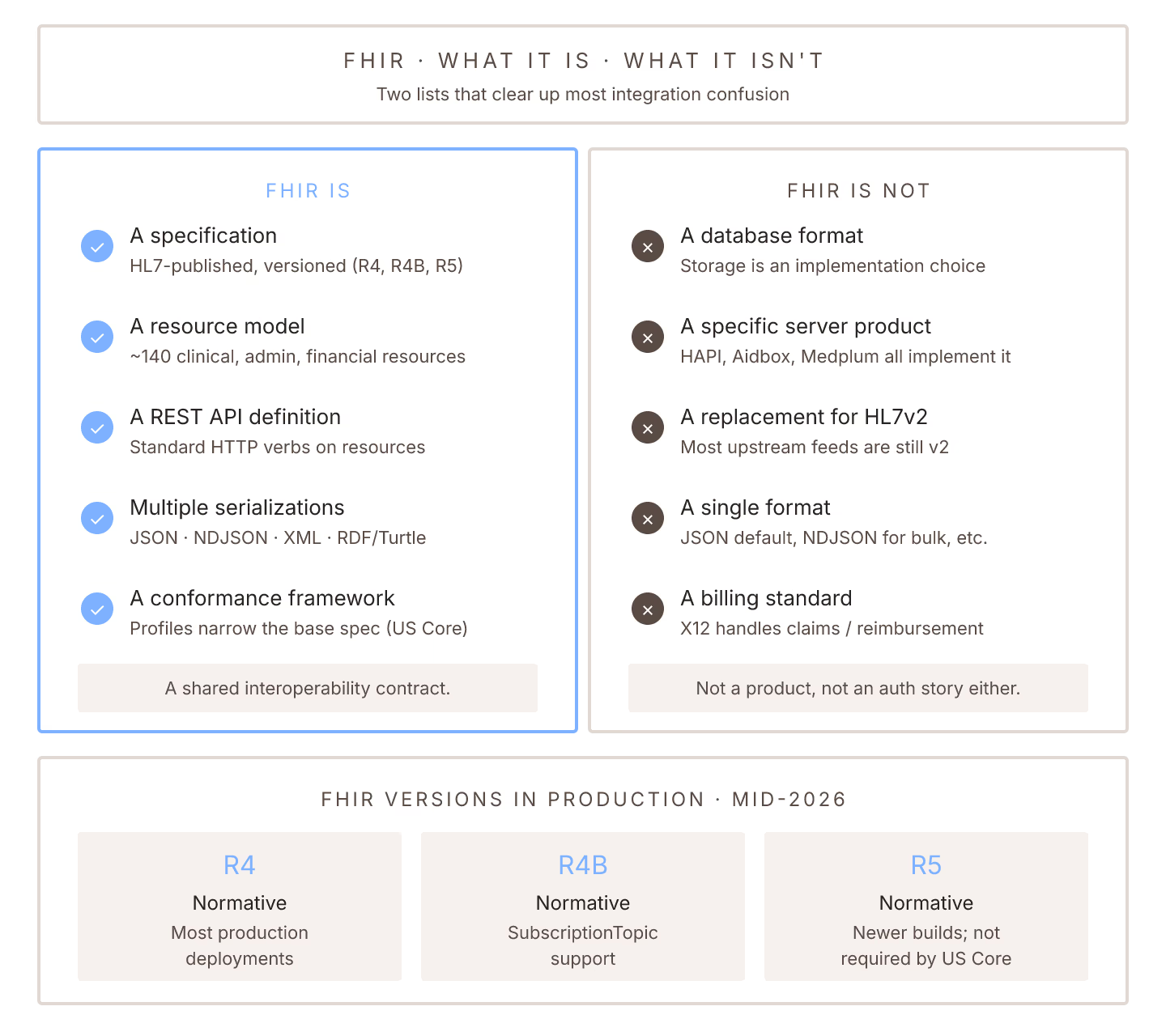
  1. Standardization, FHIR format defines a set of “resources” that represent common healthcare concepts like patients, medications, diagnoses, and procedures. Each resource has a standardized structure and data types, making it easier to exchange information consistently.
  2. Modularity, FHIR is built on a modular architecture, meaning you can pick and choose the resources you need for a specific use case. This makes it flexible and adaptable to different healthcare settings.
  3. RESTful API, FHIR uses a modern RESTful API, which is the same technology used by many popular web applications. This makes it easier for developers to integrate FHIR into existing systems.
  4. Accessibility, FHIR resources can be represented in JSON or XML, which are widely supported data formats. This makes it easier to access and process FHIR data.

Unleashing the Power, Benefits of Seamless Data Exchange

The beauty of FHIR isn’t just in the technical details; it’s in the real-world benefits it unlocks. When healthcare data flows seamlessly, amazing things can happen.

  • Improved Patient Care, Imagine a doctor having instant access to a patient’s complete medical history, regardless of where they’ve received care. This allows for more informed decisions, better diagnoses, and fewer medical errors.
  • Enhanced Research, With FHIR, researchers can access and analyze large datasets of healthcare data more easily, accelerating the discovery of new treatments and cures. “Data is the new oil,” as they say, and FHIR is the pipeline to get that oil flowing efficiently.
  • Empowered Patients, FHIR enables patients to access and control their own health information, giving them more power over their healthcare journey. Think of it as having a digital health passport that you can take with you wherever you go.
  • Cost Savings, By streamlining data exchange, FHIR can reduce administrative costs, improve efficiency, and prevent duplicate testing and procedures.

Getting Started with FHIR, It’s Easier Than You Think!

Okay, so you’re convinced that FHIR is awesome. But how do you actually get started? Well, the good news is that there are plenty of resources available to help you learn and implement FHIR format.

  • HL7.org, The official FHIR website is a great place to start. It provides detailed documentation, tutorials, and examples.
  • Online Courses, There are many online courses available that teach FHIR, ranging from beginner-friendly introductions to advanced implementation techniques.
  • FHIR Communities, Join online forums and communities to connect with other FHIR enthusiasts and experts.

Kidding aside, one thing is for sure, the healthcare industry’s future depends on the ability of systems to talk to each other seamlessly.

Final Thoughts, A Healthier Future with FHIR

So, to recap, FHIR format is a game-changing technology that has the potential to transform healthcare data exchange. It’s standardized, modular, and easy to implement, and it unlocks a wealth of benefits for patients, providers, and researchers. The ability of FHIR to be represented in JSON or XML makes it very accessible.

What do you think about FHIR? Have you seen it in action? I hope this article has inspired you to learn more about FHIR and its potential to create a healthier future for all. I know it inspires me! Now go forth and spread the word about FHIR!