
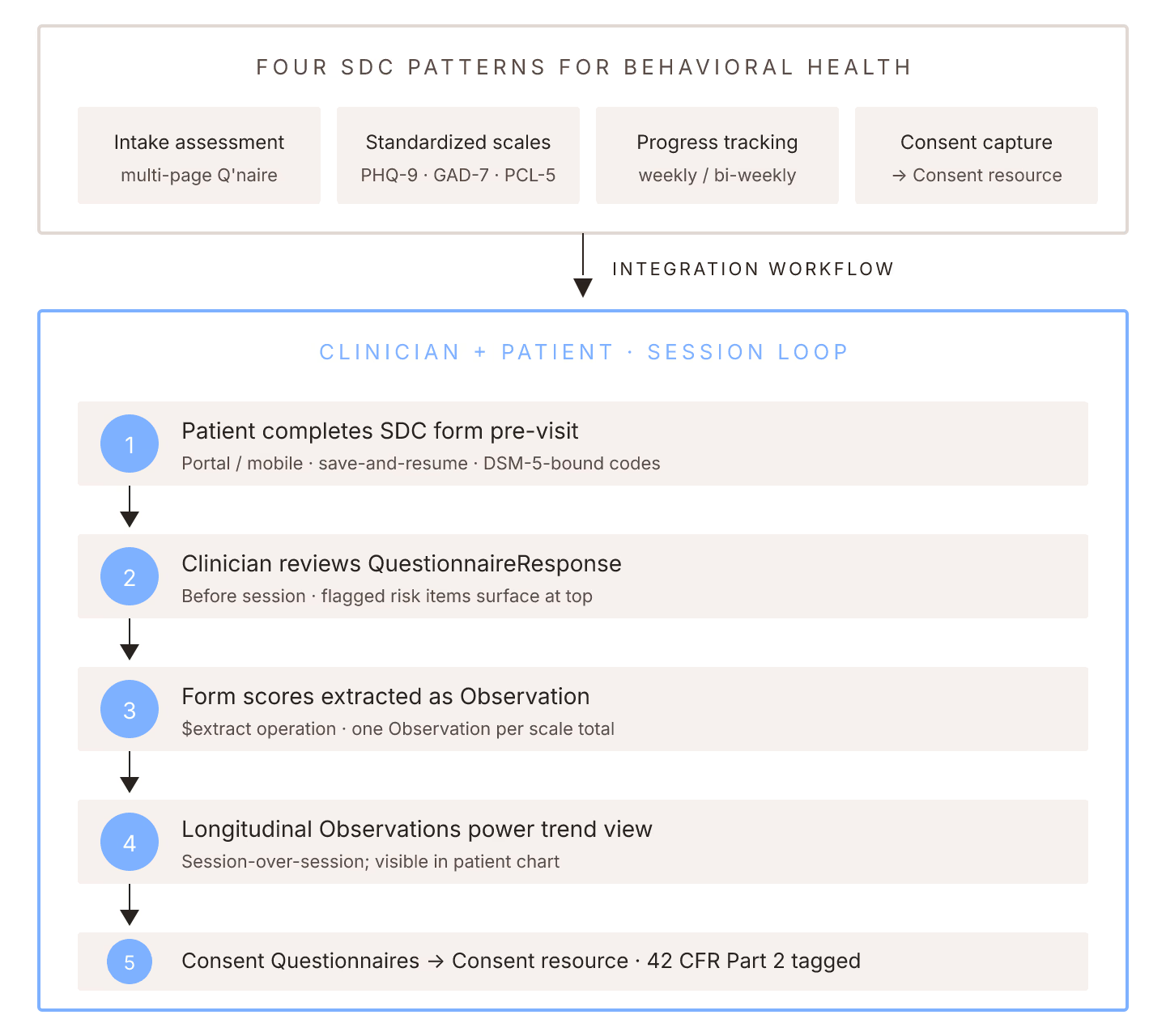
Have you ever felt lost in the maze of healthcare data, trying to piece together a patient’s story from scattered fragments? I certainly have! And let me tell you, it’s frustrating. It’s not just frustrating for doctors and nurses, but downright scary for patients. This is why I truly believe that the widespread adoption of fhir compliance solutions is not just a good idea, but an absolute necessity for the future of healthcare. It’s about time we ditch the paper trails and embrace a system that actually works for everyone involved.
The Data Deluge and the FHIR SDC Lifeline
We’re drowning in data. Hospitals, clinics, labs – they’re all generating mountains of information, but it’s often trapped in silos, incompatible systems, and frankly, just plain unreadable formats. Trying to get a clear picture of a patient’s health record can feel like trying to assemble a jigsaw puzzle with half the pieces missing. FHIR SDC, or Fast Healthcare Interoperability Resources Structured Data Capture, offers a lifeline. It provides a standardized way to represent and exchange healthcare data, using a framework that’s both flexible and powerful.
Think of it this way – imagine you’re moving to a new country. If you try to communicate using your native language only, chances are, you won’t get very far. FHIR SDC is like learning the universal language of healthcare data, allowing different systems to understand each other and share information seamlessly. This means doctors can access a patient’s complete medical history in seconds, regardless of where they were treated previously.
Why Now? The Urgency is Real
So, why is this urgent? Well, for starters, patient safety is paramount. When healthcare providers have access to a complete and accurate medical history, they can make more informed decisions, avoid medication errors, and provide better care. Missing information can lead to misdiagnosis, delayed treatment, and potentially life-threatening situations.
Furthermore, the healthcare landscape is constantly evolving. Telemedicine, remote monitoring, and personalized medicine are becoming increasingly common. These innovative approaches rely on the seamless exchange of data, and FHIR SDC provides the foundation for these advancements. Without it, we risk creating a fragmented and inefficient system that fails to meet the needs of modern patients.
“The future of healthcare is interoperable,” as Dr. Emily Carter, a leading expert in health informatics, once said. “FHIR Structured Data Capture is not just a technology; it’s a paradigm shift that will transform the way we deliver care.”
Benefits Beyond the Bedside – Efficiency and Cost Savings
The advantages of adopting FHIR SDC extend far beyond improved patient care. Think about the administrative burden on healthcare providers. Filling out forms, chasing down records, and dealing with incompatible systems takes up valuable time and resources. FHIR SDC can streamline these processes, reduce administrative costs, and free up healthcare professionals to focus on what matters most – their patients.
Here are a few concrete benefits –
- Reduced data entry errors – Standardized data capture minimizes the risk of human error.
- Improved data quality – Consistent data formats ensure accuracy and reliability.
- Faster access to information – Healthcare providers can quickly retrieve patient data when and where they need it.
- Streamlined workflows – Automated data exchange eliminates manual processes.
The Road Ahead – Challenges and Opportunities
Of course, adopting FHIR SDC is not without its challenges. Implementing new technologies can be complex and expensive, and it requires a significant investment in training and infrastructure. However, the long-term benefits far outweigh the costs.
The key is to start small, focus on specific use cases, and build momentum. Organizations can begin by implementing FHIR SDC in key areas, such as medication reconciliation or allergy management, and then gradually expand its use to other areas. It’s also essential to collaborate with industry partners, share best practices, and advocate for policies that support interoperability. The use of fhir sdcs should be encouraged!
In conclusion, the need to adopt FHIR SDC solutions for a transformative healthcare future is undeniable. It’s about improving patient safety, enhancing efficiency, and paving the way for innovation. It’s about creating a healthcare system that’s truly patient-centered and data-driven. What are your thoughts on this evolution? I hope this article inspires you to explore the potential of FHIR SDC and join the movement towards a better, more connected healthcare future!